Leucism
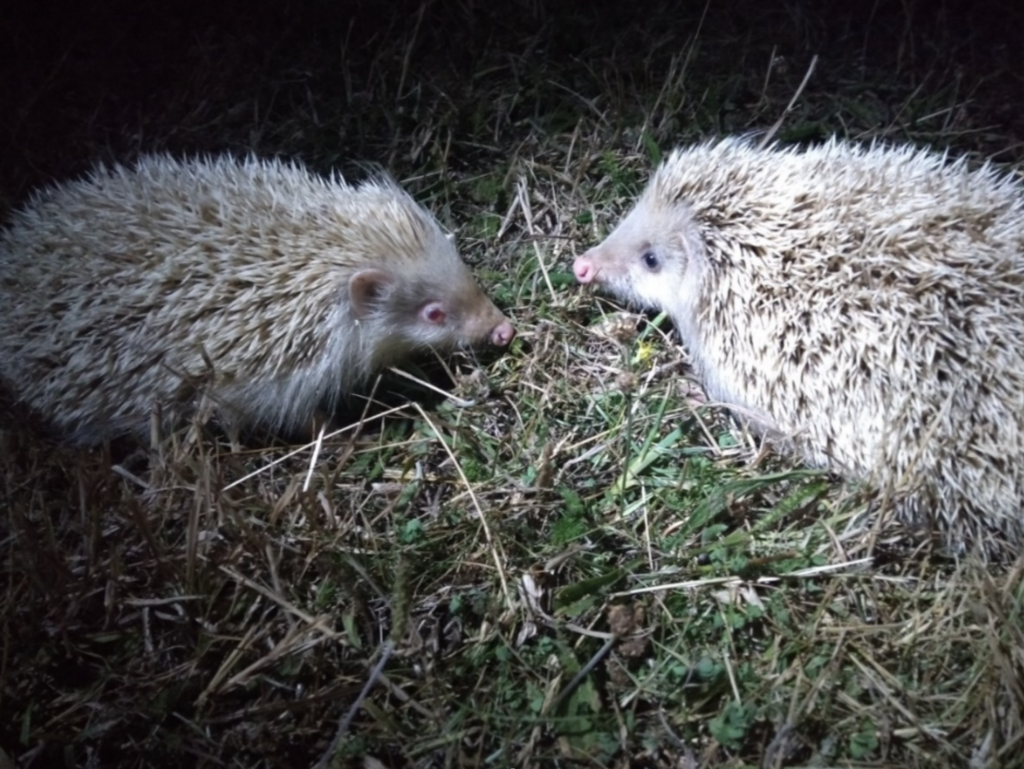
Leucism or Albinism?
These two phenotypic (observable characteristics) outcomes are produced by different genetic mutations. As can be seen from the photo, the leucistic animal has dark eyes, and the albino has red eyes (the difference in eye colour is the way to tell the specific mutation, and is the general rule throughout the animal kingdom).
We can also confirm that albinism, a fully recessive gene condition, is still on the island, albeit in low frequency, as the two pictures, the adult from 2019, and the hoglet from 2021, prove.
What effect has leucism have on the individual animal?
This mutation clearly causes the absence of colour in the spines and hair. This lack of pigment extends to the skin too. One of the genes that mutate to cause this trait is a developmental control gene of the embryo. In fact, it not only controls that development of cells called melanocytes (these are the cells within which pigment is produced), but can, but not always, inhibit the development of other cells such as sensory and gut nerves. Two of the possible outcomes can be hearing and/or intestinal problems.
Although there are many human, and some other mammalian studies that have been carried out investigating the pathologies caused by this mutation, there are none for hedgehogs, and so how, and if, this mutation effects the growing leucistic hedgehog embryo in other ways except colour is presently unknown*.
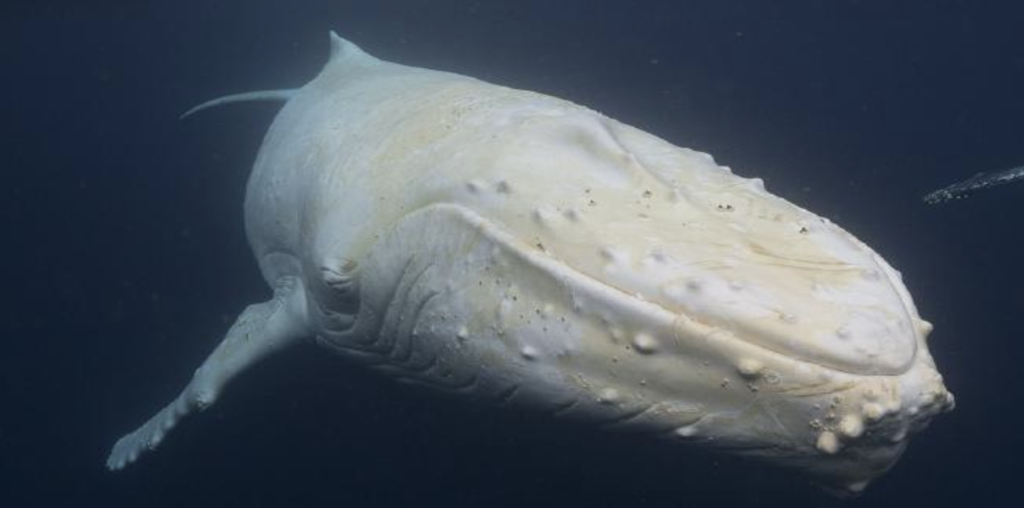
A leucistic whale

A leucistic human
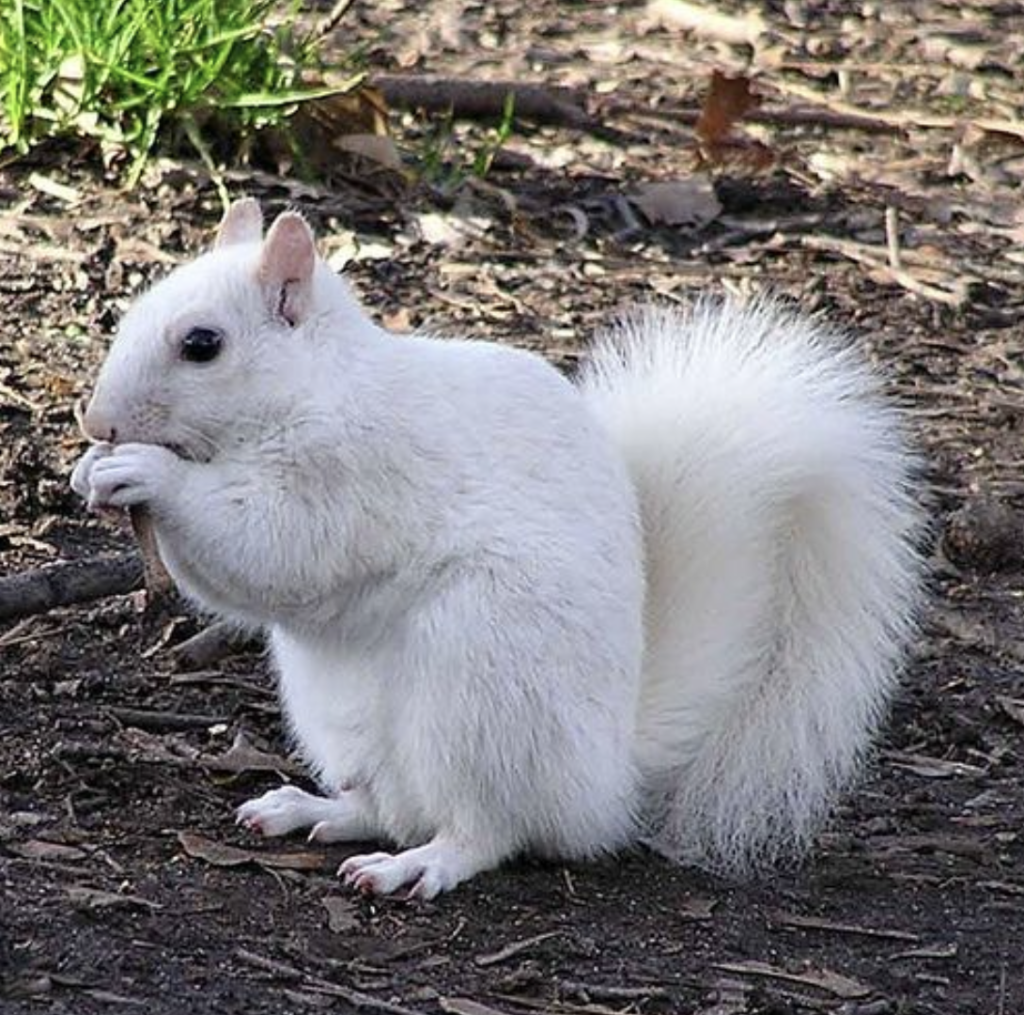
A leucistic squirrel
TALK TO US
Have any questions? We are always open to talk about your research, new projects, creative opportunities and how we can collaborate.